
Crippen’s Catch 22 cartoon
The thinking behind the ATOS Work Capability Assessment has obviously originated from somebody who is familiar with Joseph Heller’s ‘Catch-22’.
A Catch-22, as most of you will know, is a ‘heads you lose, tails you lose’ situation – there’s no way around a difficulty because of the contradictions within the issue. Often, solving one part of a problem only creates another dilemma … which ultimately leads back to the original problem. And so on. Catch-22s often result from being at the mercy of rules, regulations or procedures over which an individual has no control.
For example, in some cases we’ve heard examples of disabled people being failed just because they were able to make it to the assessment centre. The Catch-22 being that if they can manage to get to the assessment centre (which, if they don’t, will result in a loss of benefits) then they’ve apparently demonstrated that they are fit for work and therefore no longer entitled to benefits! Duh.
It’s a bit like when DLA first came out. If it caught you on a good day, then you were usually assessed as not being eligible, despite the fact that on most days you were incapable of doing the things that you’d been able to do on the ‘good’ day (still with me?). This resulted in disabled people being advised to complete their application forms using their worse case scenario as the yard stick. It made sense, it was understood by everyone and – mostly – it worked.
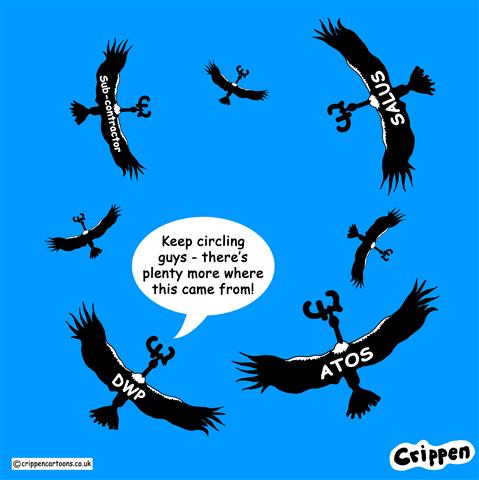
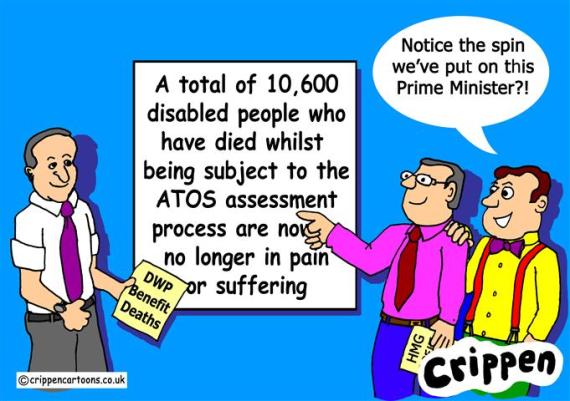
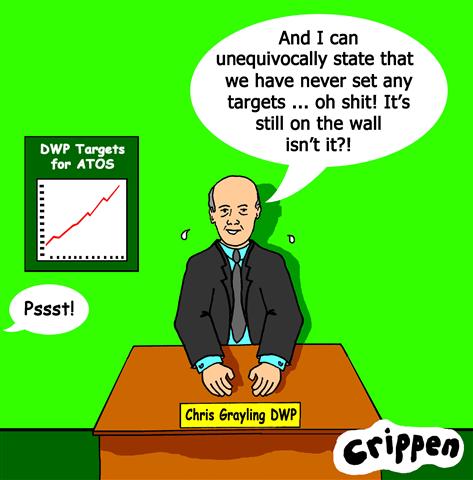
The ATOS Work Capability Assessment, apart from being ‘not fit for purpose’ has also been loaded with other ‘incentives’, such as the bonus that ATOS receives for every disabled person they take off benefits and by meeting government targets (both denied by ATOS but substantiated by whistle blowers inside of the ATOS organisation).
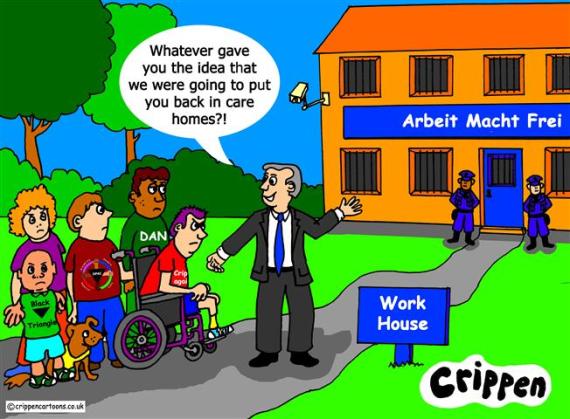
My cartoon is not all that funny when you realise that this ancient method of assessment could really be the next step …

 Crippen Cartoons